

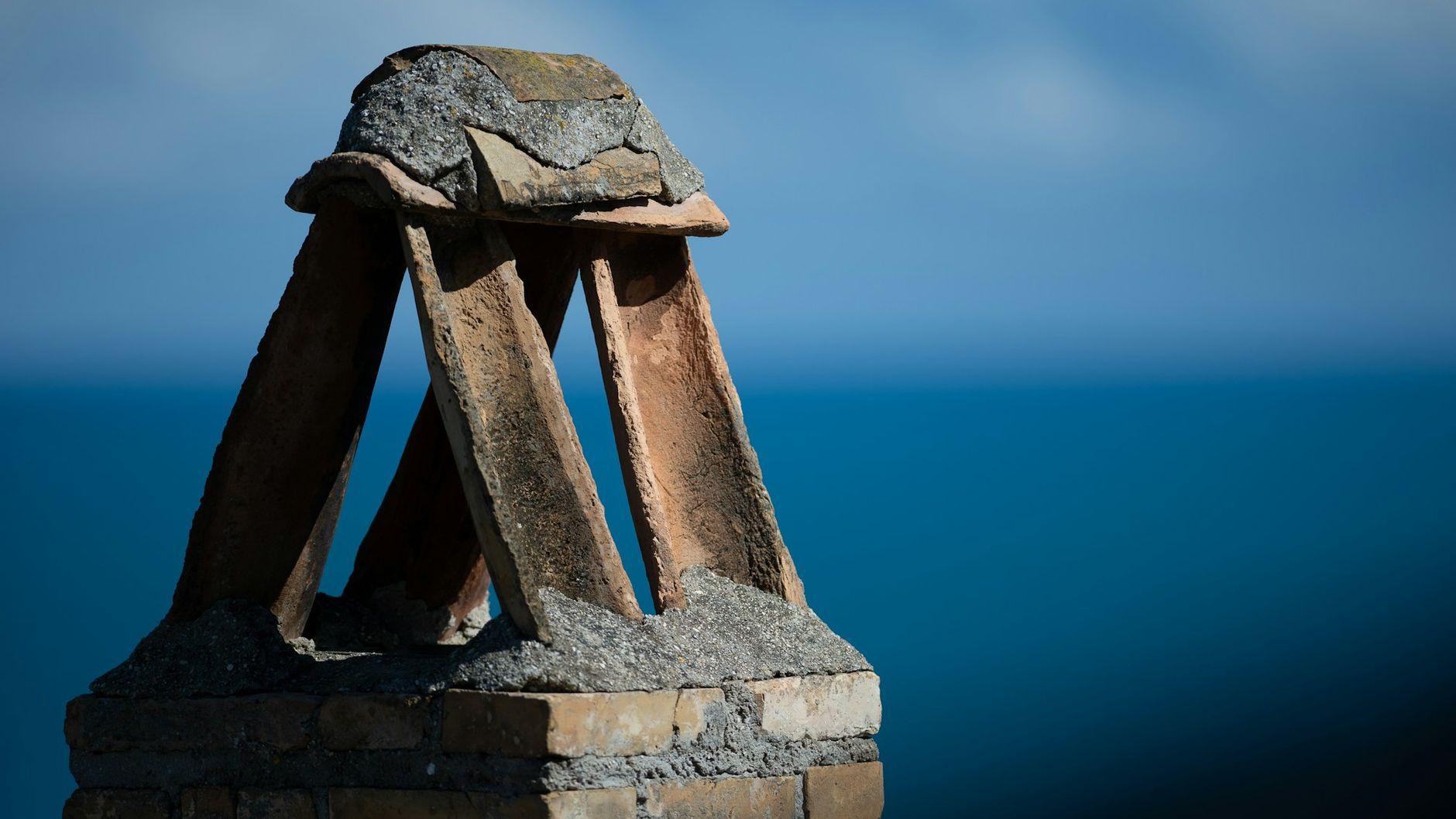
The tenant calls a missing cap produces
Owners rarely hear "the chimney needs a cap". They hear the symptoms. A tenant reports scratching in the wall above the mantel in spring. Another says the fireplace smells like wet ashes after every storm. A third sends a picture of an orange streak running down the stucco below the chimney top. Each of those calls traces back to the same small part on the roof, and each one costs the office more in time than the part does.
This guide is for landlords and managers in Costa Mesa and the nearby coastal cities deciding whether to fit or replace caps across their buildings: the types, what sets the price, and how the work is recorded per unit.
Three kinds of chimney top on a rental
| What the roof has | What fits it | Effect on the price |
|---|---|---|
| One round or square clay flue tile above a masonry top | A single-flue cap clamped to the tile | Simplest job |
| A wide masonry top with two or three tiles | A cover that mounts on the masonry and spans every flue | Costs more |
| A metal chimney inside a framed box (common on 1970s and 1980s condos) | A cap made by or approved for that chimney's maker | Depends on the model |
The third row catches owners out. A factory-built fireplace and its chimney are tested together, so the top that goes on it has to match the listing on the unit's label. A generic cap from a hardware aisle can change how the system drafts. When we find one, the page for that unit says so.
What sets the cap price
A cap on this site is quoted after we measure, fitted. The simplest job is a single-flue cap on an easy one-storey roof. The figure climbs with:
- Size. A cover spanning a wide masonry top with several flues is built to that outline and costs far more than a clamp-on cap.
- Metal. On the coast we fit stainless steel. Painted or galvanized steel rusts through within a few winters of salt air in Costa Mesa and Newport Beach, and the rust ends up on the stucco.
- Height and roof. A three-storey building, a steep tile roof or a chimney with no safe ladder line takes more setup.
- What we find underneath. A crown that has cracked open gives the new cap nothing sound to sit on. That becomes a separate crown repair line on the unit's scope rather than a surprise on the cap invoice.
Multiplied across a property, the line is simple: each flue that needs a cap is one line, and the summary sheet adds them up by building.
For a figure across your units, open the quote form and list the buildings, roughly how many chimneys each has, and whether the tops are brick or a metal box. We reply with what the round would involve and suggest pairing it with the yearly Level 1 so nobody climbs the roof twice.
Why the top of a rental chimney fails first
Inside a unit, a fireplace gets used a few dozen evenings a year. The top of the chimney gets weather every day. Three things wear it out on this part of the coast:
- Marine air. Salt and fog reach Costa Mesa daily, and thin steel at the top of a chimney is the first metal on the roof to show it.
- Santa Ana winds. Hot dry gusts in autumn knock loose caps sideways, and an unscreened flue lets embers out during a fire in the unit or lets embers from elsewhere drop in.
- Winter storms. Rain coming down an open flue rusts the damper, soaks the smoke chamber and sends the wet ash smell into the living room.
A mesh screen on the cap answers the ember and animal side. Birds and raccoons looking for a dry shaft are a spring story we hear from managers every year.
How a cap round runs on an occupied building
Most cap work happens from the roof, so tenants barely notice. We do not need to enter the unit to fit a cap on a masonry chimney, though we do look at the firebox side during the Level 1 if both are booked for one visit. Factory-built units sometimes need a look at the rating label inside, which means one short entry.
Each unit page records the old top (missing, rusted, wrong type, or sound), a photo before and after, the cap fitted and the line figure. A board or an owner can see in one glance which chimneys were done and which were left because the old cap was still sound.
Pairing caps with other work
On a building we already inspect, caps are usually the first item on the scope because they stop a small problem before it becomes a big one. Rain that gets past a missing cap ends up as a leak repair or a seized damper. Fitting the cap during the yearly inspection keeps it to one roof visit.
When the old cap stays
Not every chimney needs a new top. A stainless cap that is still square on the flue, with its mesh intact and no rust bleeding onto the masonry, stays where it is, and the unit page says so with a photo. We do not swap sound parts to fill out a round. Where a cap is only loose, we refasten it and note that on the page instead of writing a replacement line. Owners comparing bids should ask any company for that same split: caps replaced, caps refastened, caps left alone.
Book the round
To get caps on every chimney that needs one, write to us through the contact page with the properties you manage.
Putting This on Your Property Calendar?
Fairchild books rental chimney and fireplace work by unit, agrees access with tenants and files a dated page for each fireplace. Rounds leave Costa Mesa for Fountain Valley, Tustin, Newport Beach and the rest of Orange County.


